The Trust — Column Tuesday, 7th Apr 2020 14:15 by Simon Dorset With the coronavirus crisis showing few signs of abating, AKUTRs columnist Simon Dorset turned his attentions to the work of the QPR in the Community Trust down the years and how it can continue in the current crisis. In the face of the Covid-19 pandemic and guided by the government’s escalating measures to limit social interactions, the QPR in the Community Trust has had to drastically scale back its operations. Having already taken the decision to suspend the delivery of Trust activities that were not taking place within schools, the subsequent closure to all but the children of key workers and vulnerable children left little to no scope other than to support the remaining staff at these schools. I doubt that everyone reading this will be aware of the scale and breadth of the Trust’s interaction with the local community and therefore the impact this forced reduction of services will have; I certainly wasn’t until a year or so ago when I received an invitation to the Trust’s 10th anniversary reception at the House of Commons which prompted me into doing a little back ground research. Andy Evans, who is the Trust’s CEO, launched QPR’s Football in the Community scheme back in 1994 with four staff and a few apprentices whose primary focus was providing football sessions for local primary school children. Now, with 37 full-time and 68 part-time staff, the Trust runs in the region of 300 sessions per week for all age groups throughout seven London boroughs focusing on its core aims of health, education, social inclusion and sports participation. As Evans has always been keen to stress, the trust is not solely about coaching football, but openly utilises the power of football to reach people. The Trust’s work in developing young people's potential, breaking down social barriers and improving people's everyday lives has received various awards including being inducted into the Show Racism the Red Card’s Hall of Fame, winning the 2010 Football League Award for the Best Disability Community Project for the Tiger Cubs and being named the EFL Community Club of the Year for London in 2019.
In addition to these awards, Evans has also been personally recognised for his outstanding contribution and services to football as part of the FA’s 150th anniversary celebrations in 2013. Along with 149 other “grassroot heroes”, he was invited to Buckingham Palace where he received a commemorative medal from The Duke of Cambridge. Last year the Trust engaged with over 24,000 participants, the youngest being only two-years-old, the oldest over 90 highlighting the vast array of projects in operation. Without attempting anything approaching an exhaustive list, I’ll try to give a flavour here of the Trust’s work which can be categorised under six headings: Health, Education, Employability, Youth and Communities, Inclusive Projects and Participation although many of the schemes cross the notional boundaries between them. HealthExtra Time: Provides weekly social and physical sessions, such as aerobics, tai chi and archery along with health, financial and general well-being talks, for local residents aged 60 and over. Its reach has been extended into Brent where the Trust started to run sessions at the Hub Club in Stonebridge thanks to a new grant from Hyde Housing. EducationPremier League Primary Stars: Mentors children and staff at local primary schools in academic and physical education, with additional focus on Personal, Social and Health Education (PSHE) and life skills. The resources available for this project have recently been bolstered with home education options. EmployabilityPremier League Works: The Trust engages on a one-to-one basis with young people who are not currently involved in education, training or employment with a view to help them develop the skills and confidence to either resume education, enrol on a beneficial training scheme or start working. Youth and CommunitiesKicks: A national scheme funded by the Premier League which the Trust have been involved with since registering as a charity in 2009. Kicks focuses on providing young people between the ages of 8 and 25 with positive and constructive activities to help them to realise their potential and steer them away from crime and anti-social behaviour. Inclusive ProjectsTiger Cubs: I’m sure we are all familiar with the Tiger Clubs, the Trust’s football team for children and young people with Down’s Syndrome which is, in part, funded by the annual Tiger Feet walk. ParticipationMulti Sports: Encourages children from all backgrounds to participate in a range of club-based sports such as tennis, hockey and athletics. All of these projects are continually augmented by player involvement. At the House of Commons reception Steve McClaren, QPR’s manager at that time, was a great pains to stress that, whereas at some previous clubs where he’d been manager he’d had to cajole players to get involved with their community schemes, at QPR he had to ration the players’ involvement such was their appetite to be involved and had to regularly disappoint the players by restricting their participation. He put this down to both the outstandingly professional way in which the sessions were run and how enjoyable they were to take part in.
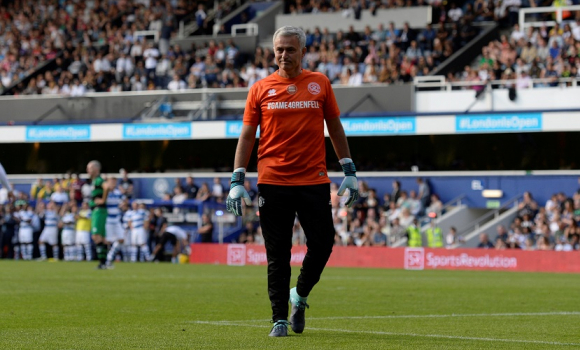
And then, of course, there is Grenfell. Winning the London Football Awards Community Project of the Year was the furthest thing from anyone’s mind when the Trust unhesitatingly threw open the gates of Loftus Road to help the survivors of the Grenfell tragedy, but it was deserved recognition for their magnificent response. As he grew up in the shadow of the tower, this was especially personal for Ferdinand who, at that House of Commons reception, spoke proudly describing how the whole club had rallied to help. The centre piece of this initiative was the celebrity match at Loftus Road in September 2017 which raised over £450,000 - a figure subsequently matched by the Royal Borough of Kensington and Chelsea — but the Trust have not lost focus on the greatest single loss of life from a fire in Great Britain since the 2nd World War and are still heavily involved with the survivors, particularly at a primary school where 80% of the children are still suffering from Post-Traumatic Stress Disorder. Under Andy Evans’ guidance, the Trust has blossomed into a vital social provider. One which is trusted with the hard earned funds of various notable charities, organisations and associations, such as the Worshipful Company of Ironmongers, the Prince’s Trust, the Royal British Legion and The Mayor’s Office because they excel at their objectives of combating exclusion, isolation for the older generation and childhood obesity, diverting teenagers from crime and anti-social behaviour and improving people’s health, well-being and quality of everyday life. Even in these unprecedented times the Trust is still reaching out to the local community. As an example, they are making weekly phone calls to every member of the Extra Time club, which is especially valuable to those who are self-isolating because they are in the high risk category. While I’m sure that Andy Evans and his team will find other ways of engaging with the community, hopefully it won’t be too long before they can restore a full agenda of activities enabling a senior citizen contact with like-minded people, a young lad with Down’s Syndrome to be able to enjoy the same team spirit as his able bodied peers or a vulnerable young person to be able to approach the world with more confidence. Simon’s previous >>> Accounting for success >>> Gambling with FFP >>> Tough battle in ongoing FFP war >>> EPPP, the greater evil >>> Terry Venables, my first hero >>> Farewell to the King >>> Gordon Jago: A soccer pioneer >>> QPR’s fairytale of New York Pictures — Action Images Action Images Please report offensive, libellous or inappropriate posts by using the links provided.
You need to login in order to post your comments |
   Blogs 31 bloggersUnited by Football, Divided by Race? Swansea City’s Asian Footballers and Racism in British Football by KeithHaynes Harrison who is studying towards a media qualification has written a very interesting piece on racism in football. It’s a very clear and well documented report. Follow him on X. @HYE15h. Football is often seen as a sport with a unique power to bring people together, connecting people from all over the world with different cultures, races and religions. 128 nations have featured in the topflight of English football, including 12 Asian nations. I have seen for myself how football connects people who otherwise have little in common through my support of Swansea City. These connections are epitomised by an exchange I had with South Korean tourists during a visit to London in August 2015. My three brothers and I were wearing our Swansea shirts, which South Korean tourists recognised because the South Korean captain, Ki Sung-yueng, was playing for our team. We connected over our shared admiration for Ki before having photos together. However, despite the unity football creates, racial incidents challenge the belief that football is a game for all. Kick It Out data shows there were 1,744 reports of discrimination, a record high last season, whilst racism reports against South Asians increased by 100%. This season we’ve already seen racial abuse allegedly directed at Swansea City’s Ji-Sung Eom during a game against Millwall. Former Swansea British Asian player Yan Dhanda was also subjected to racist messages online in 2021. Ki’s experience of racist chanting in Scotland in 2010 before joining Swansea shows that racism against Asians in British football is not a new phenomenon. In light of these incidents I will analyse the impacts of racial abuse against Asian players and football more widely, and ask if enough is being done to stop it. There are a multitude of different impacts from racial abuse within football, most notably the damage to player welfare. Yan Dhanda talked about the hurt he felt in the aftermath of his attack, stating how it affected both his family and how he was in training. Research by Osinnowo Kolawole reveals how the long-term emotional damage of racism is often unseen, affecting both personal lives and their performance. Racism can also lead players to question whether they want to continue playing football, as seen with Danny Rose. Osinnowo further states how racial trauma can lead to deep internal conflicts, with players altering their appearances to conform to white norms in football. For Lee Chun-Soo a former South Korean international footballer racist abuse left him with a desire to build a larger physique as a way of preventing further abuse. He believes the racial stereotypes about Asian players being small and weak results in a reluctance to recognise Asian players as equal competitors. This provides an example of an Asian player having to change who he is to be accepted into the sport, Lee and other victims of racism state how it can lead them to question their sense of belonging in the game. Premier League video content creator Kevin Yuan often faces racist abuse when filming at UK stadiums, despite living in the UK and following football since 2008, he states how he “feels like a foreigner, like I don’t fit in”. This challenge to a player’s sense of not belonging within the game has also had a severe impact on Asian participation with football in Britain, with just over 1% of professional players being of South Asian heritage. Whilst there are many factors which underpin this underrepresentation, racial abuse definitely plays a role. Research by Dr Stefan Lawrence reveals that overt racism within football academies from other players, makes British Asians feel like outsiders. Yan Dhanda talks about how during his time in football academies he was always told he wouldn’t make it due to his Asian background. For other Asian players lacking self-belief and support, abuse can prevent progression. Separate Asian teams and leagues have emerged in direct response to racism; these are seen as safe spaces for Asian players. Dr Lawrence has found that these separate teams and leagues do not have the same level of exposure as mainstream leagues, whereby they aren’t seen by scouts as repositories of talent. Furthermore, the lack of professional Asian players as role models not only limits young Asian players’ beliefs, but also limits coaches’ and scouts’ beliefs in what Asian players they are assessing could become. Seeing the few professional Asian players subjected to racial abuse risks discouraging the next generation from pursuing football. To combat racism in British football, a range of initiatives have been implemented by the leagues, clubs and organisations such as Kick It Out and Show Racism The Red Card. Whilst reports of racism are at a record high, this doesn’t necessarily mean that there is greater racism within football. More reports against racist abuse suggest people are more willing to report racist abuse when they see it, standing up to racism. Since 2022, Kick It Out has run fan education programmes for 500 fans referred by clubs or police, with a reoffending rate of just 1.25%. This shows the impact education can have in tackling racism. However, with 792 reports of racism in 25/26 season alone, many more of these programmes are needed to cover all the perpetrators of racist abuse. An increase of reporting by the media in highlighting racism within football can also be seen. For example, Sky Sports’ “Football’s Hidden Talent” series highlights the racism and inequality South Asians face in football. The racist incident against Ki in 2010 only making the local newspaper, compared to the nationwide and international coverage of the racial abuse against Eom, shows the heightened media coverage of racism in football. Whilst attitudes towards tackling racism have seemingly improved, there are still drawbacks. On-pitch protocols in dealing with racist abuse which were followed during the incident with Eom led to a 7-minute break in play, which afterwards was criticised by the Millwall manager for “killing the momentum”. Such comments were heavily criticised within the game for prioritising momentum over player welfare. An increasing number of Asian players in British football has coincided with Asians taking up a greater share of racism victims. Whilst more people are willing to report racism within the game, this has only revealed the great scale to which racism remains deep rooted in the game. In addressing this problem, harsher sanctions against perpetrators are needed. Cracking down on racism is crucial in addressing the underrepresentation of Asian players in professional football. The lived experiences of Asians in British football expose inequalities in who feels they belong within football. Football should be a game for all, with everyone equally included, whilst it connects so many, in its current state too many are left out. Swansea City has been at the forefront of taking action against racism within football. It was the first club to stage a social media boycott in April 2021 after abuse against Yan Dhanda, Ben Cabango and Jamal Lowe. A second boycott, which Swansea City participated in later that month involved other clubs and sports organisations across the world, representing a combined following of 1.7billion. Swansea City’s resolute actions against racism are reflective of one of the club’s strategic pillars ‘Cymdeithas’, which places the community, togetherness, and belonging at the heart of the club’s identity. It is an ethos that extends beyond the football pitch reflecting the importance of creating an environment in which everyone feels welcome and valued. The unwavering support shown towards Eom by the Jack Army in the aftermath of the alleged racist abuse he experienced, provides an illustration of these values in practice. Ultimately this piece has sought to highlight the very real and immediate impact that racial abuse can have on footballers, and why such behaviour cannot simply be dismissed, ignored, or accepted as part of the game. Eom Ji-sung’s experience is not an isolated incident, but forms part of a wider history of racial discrimination experienced by Asian players within football, including those who have represented Swansea City. While the club’s response and the unwavering support shown by supporters towards Eom provide encouraging examples of what football can represent at its best, there remains much work to be done in the fight against racism. My best wishes go to Eom, with the hope that the support of Swansea City and the Jack Army remains far louder than the abuse he has faced. Bibliography Premier League, 13 September 2025, https://www.premierleague.com/ Sky Sports, 31 July 2025, https://www.skysports.com/foot Andrew Raeburn, BBC Sport, 14 October 2026 https://www.bbc.co.uk/sport/fo BBC Sport, 11 February 2021, https://www.bbc.co.uk/sport/fo The Courier, 2 November 2010 https://www.thecourier.co.uk/s Swansea City AFC, 18 February 2021, Swansea City AFC, 8 April 2021, https://www.swanseacity.com/ne Swansea City AFC, 13 May 2021, https://www.swanseacity.com/ne Osinnowo, Kolawole, 2024, Exploring the Experiences of Racial Trauma among Footballers. https://uhra.herts.ac.uk/id/ep BBC Sport, 4 April 2019 https://www.bbc.co.uk/sport/fo Lee Chun-Soo, 23 October 2026, Nizaar Kinsella, BBC Sport, 20 November 2024, https://www.bbc.co.uk/sport/fo Kick It Out, 30 September 2026, https://www.kickitout.org/site COPA90, 24 January 2019, Gareth Vincent, BBC Sport, 12 November 2020, https://www.bbc.co.uk/sport/fo Sky Sports News, 25 May 2024, Sky sports, 31 July 2026, https://www.skysports.com/foot Kick It Out, 30 September 2026, https://www.kickitout.org/site Sky Sports News, 25 May 2024, Colchester United Polls[ Vote here ] |
 By continuing to use the site, you agree to our use of cookies and to abide by our Terms and Conditions.
We in turn value your personal details in accordance with our Privacy Policy.